How to Find a Children Eye Exam Near Me
School forms are due, your child is squinting at the TV, or a teacher mentions trouble focusing in class. That is usually when parents start searching for a children eye exam near me. The challenge is not just finding an office nearby. It is finding a practice that knows how to make kids comfortable, spot issues early, and give parents clear answers.
A child’s eye exam should feel thorough, calm, and personal. Kids do not always explain what they are seeing clearly, and many vision problems are easy to miss at home. Some children assume everyone sees the way they do. Others adapt so well that parents do not realize there is a problem until school performance, headaches, or eye strain start showing up.
Why a children eye exam matters more than many parents expect
Vision plays a major role in learning, coordination, reading, and confidence. If a child cannot see the board clearly, track words comfortably, or focus without strain, that can affect far more than eyesight. It can influence attention, behavior, and willingness to participate.
That is one reason basic school screenings are not the same as a full eye exam. Screenings can be useful, but they are limited. They often focus on a narrow set of issues, such as distance vision, and may miss concerns involving eye teaming, depth perception, focusing ability, or early eye health changes.
A comprehensive children’s eye exam takes a broader look. It checks how the eyes work together, how clearly your child sees up close and far away, and whether there are signs of underlying concerns that need attention. For parents, that kind of complete care brings peace of mind. For children, it can make everyday life easier in ways that show up quickly.
When to search for a children eye exam near me
Sometimes the need is obvious. Your child may squint, tilt their head, sit too close to screens, rub their eyes often, or complain about blurry vision. They may say words move on the page or that their eyes feel tired.
Other times, the signs are less direct. A child who avoids reading, loses their place while doing homework, gets frequent headaches, or seems unusually frustrated with close-up work may be dealing with a vision issue. Even clumsiness can occasionally relate to depth perception or visual processing challenges.
There is also the simpler answer: book regular exams even if your child has not complained. Many childhood eye conditions develop gradually, and children are not always the best judges of what is normal. Preventive care matters because early detection often makes treatment easier and more effective.
What to look for in a children’s eye doctor
When parents search for a children eye exam near me, location matters, but experience and approach matter just as much. A good pediatric-friendly eye exam is not rushed. It is structured in a way that helps children feel safe and cooperative.
Look for a practice that offers comprehensive eye exams, not just quick vision checks. You want a team that can explain findings in plain language and answer practical questions, such as whether glasses are necessary now, how often follow-ups are needed, and what changes to watch for at home.
It also helps to choose an office that can support the full process in one place. If your child needs glasses, being able to move from exam room to frame selection without added hassle can make the experience much easier. Parents are often balancing school schedules, work, and activities, so convenience is not a small detail. It is part of good care.
A family-friendly environment also makes a difference. Children tend to respond better when the staff is patient, welcoming, and skilled at adjusting the visit to the child’s age and personality. Some kids are curious and chatty. Others are nervous and need extra reassurance. The best care teams know how to meet both where they are.
What happens during a children’s eye exam
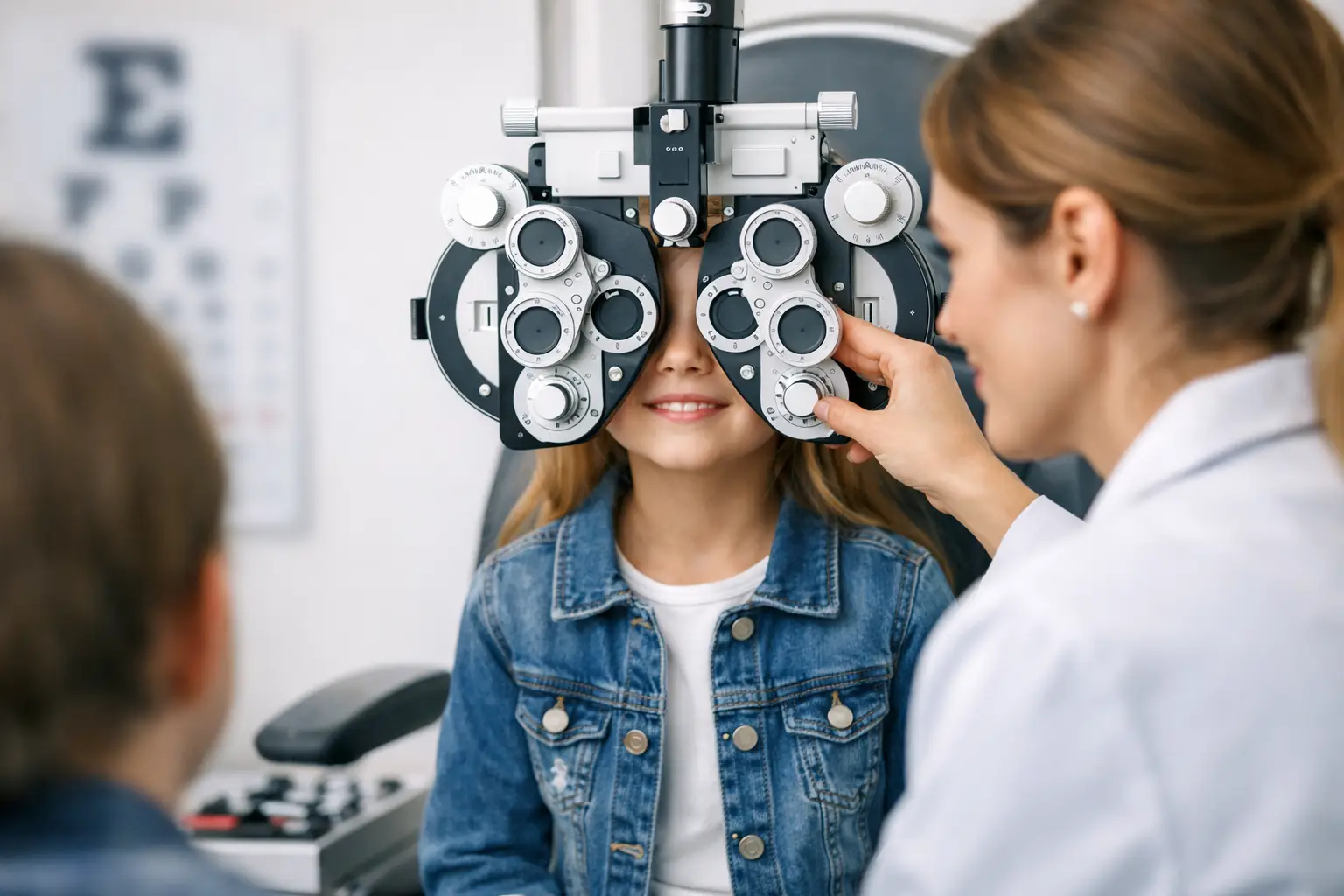
Parents sometimes worry that an eye exam will be stressful for younger children. In most cases, it is straightforward and child-friendly. The visit is designed to gather useful information in ways kids can handle.
A comprehensive exam may include checking visual acuity, eye alignment, focusing ability, tracking, depth perception, and overall eye health. Depending on your child’s age and symptoms, the doctor may also evaluate whether glasses could help with reading comfort, classroom performance, or distance clarity.
This is where a thorough exam is especially valuable. A child can pass a simple vision screening and still have an issue that affects everyday life. For example, they may see letters clearly on a chart but struggle to keep their place when reading or to shift focus from desk work to the board. Those details matter.
If treatment is needed, the next step depends on the diagnosis. Sometimes glasses are the answer. Sometimes monitoring is appropriate. In other cases, the doctor may recommend additional care or more frequent follow-up visits. There is no one-size-fits-all plan, which is why personalized attention matters.
Children’s glasses, comfort, and confidence
If your child does need glasses, the right fit goes beyond prescription strength. Comfort, durability, and style all play a role in whether they will actually wear them.
A good optical team can help parents choose frames that fit securely, feel comfortable through a school day, and match the child’s preferences. That might sound secondary to the medical side, but it is not. Kids are more likely to wear glasses consistently when they feel good in them.
This is also where having both clinical care and optical support under one roof can be helpful. After the exam, parents can get immediate guidance on lens options, frame fit, adjustments, and repairs. That kind of support saves time and reduces the stress of managing vision care in separate places.
Insurance, convenience, and the real-life side of care
For many families, practical details shape the decision just as much as medical expertise. Office hours, appointment availability, insurance acceptance, and turnaround time for glasses all matter.
If you are comparing local options, it is reasonable to ask whether the practice accepts your insurance, how quickly you can get an appointment, and whether they provide help with adjustments or repairs after the visit. A nearby office is useful, but so is a team that makes follow-up easy.
That is often the difference between a one-time visit and a long-term relationship with a trusted eye care provider. Families usually want a place they can return to for annual exams, changing prescriptions, urgent concerns, and eyewear updates as children grow.
How to prepare your child for the appointment
A little preparation can help the visit go smoothly. Keep your explanation simple and positive. You can tell your child the doctor is going to check how their eyes are working and make sure they are seeing clearly.
If your child already wears glasses, bring them to the appointment. It is also helpful to share any concerns you have noticed, even if they seem minor. Mention headaches, reading struggles, light sensitivity, eye rubbing, or classroom concerns. Small details can help guide a more accurate evaluation.
Try not to frame the visit as a test your child has to pass. That can create unnecessary pressure. The goal is not performance. The goal is understanding how their eyes are working and what support, if any, will help them most.
Finding the right children eye exam near me for your family
Not every family is looking for the same thing. Some parents want the closest office. Others are focused on insurance, appointment speed, or access to stylish but durable children’s frames. Those priorities are all reasonable. Still, the best choice is usually a practice that combines medical thoroughness with genuine personal care.
That means clear communication, a welcoming environment, and the ability to support your child beyond the exam itself. At T&T Eyecare, that complete-care approach matters because children’s vision is not just about getting a prescription. It is about helping kids see comfortably, learn confidently, and feel cared for at every step.
If you are searching for answers, trust your instincts. When your child seems to be struggling with vision, waiting rarely makes things easier. A thoughtful exam can bring clarity quickly, and sometimes a small change in vision care makes a very big difference in a child’s daily life.