
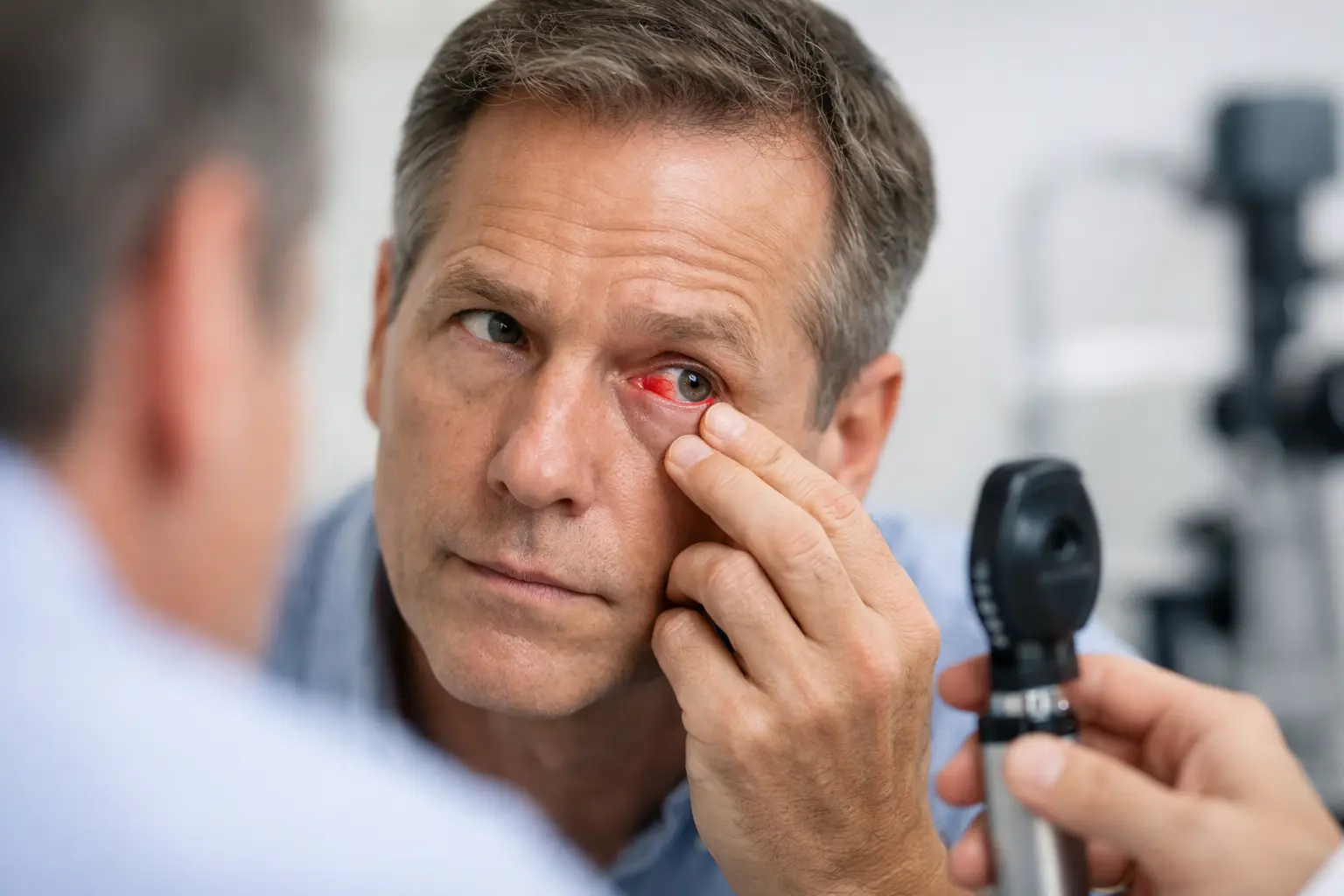
Urgent Eye Care for Red Eye: When to Go
One eye looks pink in the mirror, feels irritated, and starts watering before work or school. By lunchtime, you are wondering whether it is just dryness, allergies, or something that needs attention right away. Urgent eye care for red eye matters because redness can come from something minor, but it can also be the first sign of an infection, injury, inflammation, or pressure problem that should not wait.
Why red eye should not always be brushed off
Red eye is a symptom, not a diagnosis. That is what makes it tricky. Two people can have eyes that look equally red, but one may have simple irritation while the other has a condition that threatens vision if treatment is delayed.
Sometimes the cause is straightforward. Lack of sleep, seasonal allergies, dry air, contact lens overuse, and a little debris under the lid can all trigger redness. In those cases, the eye may feel scratchy or tired, but vision usually stays clear and the discomfort is mild.
Other times, the redness comes with pain, light sensitivity, discharge, blurry vision, swelling, or the feeling that something is seriously wrong. That is when a same-day eye evaluation becomes much more important. The goal is not just to make the eye look better. It is to protect the health of the cornea, retina, optic nerve, and the rest of the eye before the problem gets worse.
Urgent eye care for red eye: the signs you should not ignore
A red eye needs prompt care if the symptoms go beyond mild irritation. Pain is one of the biggest warning signs. If the eye hurts, especially if the pain feels deep or sharp, that is different from basic dryness or a little itchiness.
Blurred vision is another signal that deserves attention. Even temporary blurring can point to corneal damage, inflammation, or increased eye pressure. Light sensitivity also matters. If normal indoor light suddenly feels harsh, the eye may be more inflamed than it appears.
Discharge can offer clues too. Thick yellow or green drainage may suggest infection. A very watery red eye could be irritation, a viral issue, or even a corneal problem. Swelling around the eye, trouble opening it, or redness after something got into the eye should all move the situation into urgent territory.
You should also seek urgent care quickly if the redness started after an injury, chemical exposure, welding, yard work, or contact lens wear. Contact lenses can increase the risk of corneal infection, and those infections can progress fast.
Common causes of a red eye
Not every red eye is dangerous, but it helps to know the range of possibilities. Allergies often cause redness in both eyes, along with itching and tearing. Dry eye can leave the eyes looking bloodshot and feeling tired, especially after long hours on screens or in air-conditioned spaces.
Pink eye is one cause many people think of first. Conjunctivitis can be viral, bacterial, or allergy-related. Viral cases are often watery and contagious. Bacterial cases may produce more discharge. Allergy-related redness tends to itch more than it hurts.
Then there are causes that need faster diagnosis. A scratched cornea can be extremely uncomfortable and make the eye tear constantly. A corneal ulcer, often linked to contact lens misuse or infection, may start with redness but quickly become more serious. Inflammation inside the eye, such as uveitis, can cause pain, redness, and light sensitivity. Acute glaucoma can create severe pain, blurred vision, headache, nausea, and significant redness.
A burst blood vessel on the white of the eye can look dramatic, but it is often less serious than it appears. Even so, if it happens after trauma or comes with pain or vision changes, it still needs evaluation.
When home care may be enough
There are times when watching symptoms for a short period is reasonable. If the eye is mildly red after a long day, feels dry, and improves with rest and lubricating drops, that may not require urgent treatment. If you have known allergies and both eyes become itchy during a high-pollen day, the cause may be familiar and manageable.
But home care only makes sense when symptoms are mild, vision is normal, and there is no meaningful pain. If the eye gets worse, stays red for more than a day or two, or starts developing new symptoms, it is time to schedule care.
This is where people often wait too long. They assume the eye just needs another night of sleep or a few over-the-counter drops. Sometimes that works. Sometimes it delays treatment for a problem that would have been much easier to manage earlier.
What not to do with a red eye
Trying to fix a red eye without knowing the cause can backfire. It is best not to wear contact lenses until an eye doctor says it is safe. Contacts can worsen irritation and trap bacteria against the eye.
Avoid using leftover prescription drops from a prior problem. A drop that helped once may be the wrong treatment this time. Steroid drops are a good example. They can be helpful for some conditions and harmful for others, especially certain infections.
Do not rub the eye, even if it itches. Rubbing can make inflammation worse and can scratch an already irritated surface. If something may be in the eye, flushing it gently with sterile saline or clean water is reasonable, but digging at it is not.
If there has been chemical exposure, flush the eye immediately and seek urgent care right away. That is one of the clearest situations where every minute counts.
What to expect during an urgent eye visit
A red eye exam is about more than a quick look. The doctor will ask when the redness started, whether it affects one or both eyes, and what symptoms came with it. They will want to know about contact lens use, recent illness, allergies, injury, and any history of eye disease.
The exam may include checking visual acuity, evaluating the front surface of the eye, measuring eye pressure, and using special dye to look for scratches or corneal damage. Depending on what is found, treatment may involve prescription drops, careful monitoring, temporary changes to contact lens wear, or referral for additional medical care if needed.
For patients and families, the biggest benefit of urgent eye care is clarity. Instead of guessing, you get an answer and a plan. That often means faster relief, but it also means less risk of complications and less chance of the issue affecting work, school, driving, or daily life.
Urgent eye care for red eye in kids, adults, and seniors
Red eye does not look the same in every age group. In children, it may be linked to pink eye, allergies, or a foreign body from play or sports. Kids may not describe pain clearly, so watch for squinting, rubbing, tearing, or refusing to open the eye.
Working adults often try to push through symptoms, especially if they spend long hours on screens or wear contact lenses. That can make it easy to dismiss redness as fatigue. If the discomfort is increasing or the eye is sensitive to light, it is worth getting checked sooner rather than later.
For seniors, red eye may overlap with dry eye, medication effects, or age-related eye conditions. Because some serious problems become more common with age, a new red eye with pain or vision change should not be shrugged off.
Why timely care makes a difference
With eye issues, timing matters more than many people realize. A minor irritation can improve on its own, but an untreated infection or inflammatory condition can escalate quickly. The difference between a simple treatment plan and a more complicated recovery often comes down to how soon the eye is examined.
That is why personalized attention matters. A same-day evaluation can sort out whether the issue is mild, contagious, contact lens-related, injury-related, or part of a larger eye health concern. At T&T Eyecare, that kind of complete care means looking beyond the redness itself and focusing on what will keep your eyes comfortable, healthy, and seeing clearly.
If your eye is red and you are unsure whether to wait, trust the symptoms in front of you. Pain, blurred vision, discharge, light sensitivity, swelling, or redness after injury are all good reasons to call for prompt care and get peace of mind before a small problem has the chance to become a bigger one.