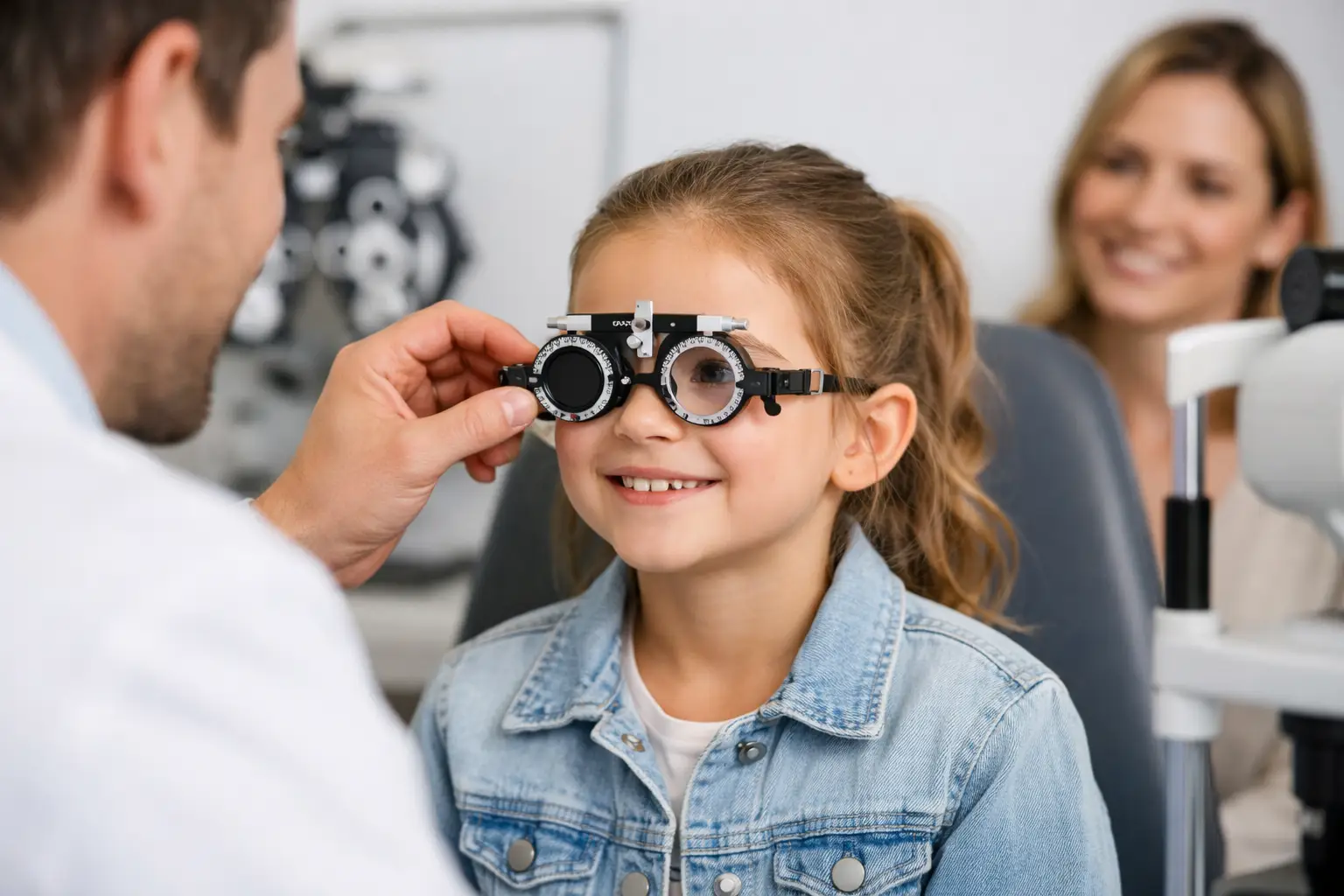
When Should Kids Get Eye Exams?
A child can pass a school vision screening and still struggle to see clearly in ways that affect reading, focus, and confidence. That is why parents often ask when should kids get eye exams – and the answer is usually earlier, and more regularly, than many expect.
Vision changes quickly in childhood. Eyes are still developing, school demands increase every year, and many vision problems are not obvious at home. A child may not complain because they assume everyone sees the way they do. Some learn to adapt by sitting closer, squinting, avoiding books, or losing interest in tasks that feel harder than they should.
When should kids get eye exams by age?
A good rule is to think about eye care as part of a child’s routine health care, not something you wait on until there is a problem. Children should have their eyes checked in infancy, again before starting school, and regularly throughout their school years.
In the first year of life, babies should have an early eye assessment as part of pediatric care. This helps identify major concerns such as eye misalignment, congenital issues, or anything affecting healthy visual development. If there is a family history of eye disease, a premature birth, or any noticeable concern, a comprehensive exam with an optometrist may be needed even sooner.
Between ages 3 and 5, children benefit from a more complete eye exam. This is an important window because problems like lazy eye, focusing issues, or eye turns respond best when caught early. Waiting until a child can read the chart at school can mean missing a chance for easier treatment.
Before first grade, children should have a comprehensive eye exam, even if they seem fine. Starting school places new demands on the visual system. Kids need more than distance vision to succeed in class. They also need comfortable near vision, eye teaming, tracking, and focusing stamina.
After that, most school-aged children should have an eye exam every year, especially if they wear glasses, have a known vision condition, or spend a lot of time on close-up work and screens. Some children may be advised to come less often, but annual visits are common because growth can change prescriptions quickly.
Why school screenings are not enough
School screenings have value, but they are limited. They are designed to catch some common issues, mainly reduced distance vision. They do not replace a full eye exam.
A comprehensive exam looks at much more than whether a child can identify letters across the room. It checks how the eyes work together, how well they focus up close, whether there are signs of eye disease, and whether visual development is on track. A child can have 20/20 distance vision and still have trouble with reading comfort, depth perception, or sustained concentration.
This matters because vision problems do not always look like eye problems. They can show up as headaches, short attention span, messy schoolwork, skipping lines while reading, or resistance to homework. Parents sometimes worry about behavior or learning first, when vision deserves a closer look too.
Signs your child may need an eye exam sooner
Sometimes the calendar guides you. Other times, your child’s behavior does. If you notice changes, it is worth scheduling an exam rather than waiting for the next routine visit.
Pay attention if your child squints, sits very close to screens, holds books unusually near, rubs their eyes often, tilts their head, covers one eye, or complains of headaches. Frequent blinking, light sensitivity, watery eyes, or one eye drifting inward or outward also deserve attention.
School-related signs can be just as important. A child who avoids reading, loses their place often, reverses letters beyond the expected age, or says the words on the page look blurry may not simply be distracted. Vision strain can make school feel frustrating.
Younger children may be harder to read. In toddlers and preschoolers, you may notice poor eye contact, trouble tracking objects, delayed interest in pictures or books, or clumsiness that seems beyond the usual bumps and tumbles of childhood. Not every sign means there is a serious issue, but it is worth checking.
Common vision problems in children
Several eye conditions can affect children, and some are easier to treat when found early. Refractive errors are the most familiar. These include nearsightedness, farsightedness, and astigmatism. A child may need glasses for school, sports, or full-time wear depending on the prescription and symptoms.
Eye coordination and focusing issues are also common. These problems may not be obvious without testing, yet they can affect reading speed, comfort, and attention. Children might describe the words as moving, doubling, or getting tired after a short time.
Amblyopia, often called lazy eye, happens when vision in one eye does not develop properly. Strabismus, or an eye turn, can lead to amblyopia if not treated. Early diagnosis makes a real difference because the visual system is more responsive in younger children.
Exams also help detect less common but important concerns such as eye health problems, inherited conditions, or signs linked to broader medical issues. That is one reason a complete exam offers more reassurance than a quick screening.
What happens during a children’s eye exam?
Many parents worry that their child will not cooperate, especially if they are very young. In practice, children’s eye exams are designed to be age-appropriate and comfortable. A skilled eye care team knows how to work with different developmental stages.
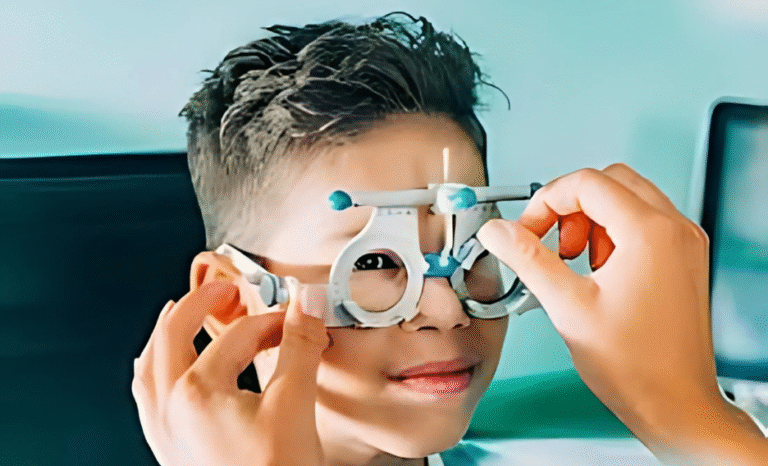
The exam may include checking visual acuity, eye alignment, tracking, focusing, depth perception, and eye health. For younger children, this often involves symbols, pictures, lights, or simple observation rather than standard letter charts. The goal is to understand how the child sees and how their eyes work together.
Sometimes dilation is recommended so the optometrist can get a clearer view inside the eye and measure the prescription more accurately. Parents may not love the idea because it can make kids light-sensitive for a few hours, but it can provide valuable information.
If glasses are needed, the conversation should go beyond the prescription. Fit, comfort, durability, and how the child will use the glasses all matter. A pair that looks good but slides down all day is not the best choice for a busy child.
How often should kids get eye exams after glasses?
Once a child starts wearing glasses, regular follow-up becomes even more important. Prescriptions can change as children grow, and the way they use their eyes changes too. A child who was comfortable last year may now be squinting in class or struggling with reading up close.
In most cases, children with glasses should have annual exams, though some may need more frequent follow-up depending on age, prescription strength, or specific eye conditions. If your child breaks their glasses, starts complaining again, or seems to stop wearing them because they are uncomfortable, it is worth having both the eyewear and the eyes rechecked.
This is also where personalized care matters. Some kids need a small adjustment to their frames. Others need a prescription update. Sometimes the issue is not the glasses at all, but dry eyes, screen fatigue, or a change in visual demands at school.
Screens, study habits, and modern eye strain
Parents today are managing a different visual environment than previous generations. Children spend more time on tablets, phones, laptops, and homework than ever before. Screen use does not automatically damage eyes, but it can contribute to fatigue, dryness, and more time spent focusing up close.
That is one reason the question when should kids get eye exams has become more relevant. Even if your child is not complaining, increased near work can reveal focusing issues or make an existing prescription feel less effective.
It helps to encourage screen breaks, outdoor time, and good lighting for reading and homework. But those habits work best alongside regular exams, not instead of them. Healthy routines support vision. They do not replace professional evaluation.
When to book sooner rather than later
There are times when it makes sense not to wait. If your child has an eye injury, sudden redness, pain, light sensitivity, double vision, or a sudden change in vision, prompt care is important. The same is true if one eye starts turning, the eyelids droop noticeably, or your child begins having frequent unexplained headaches.
Parents know their children best. If something seems off, trust that instinct. It is far better to hear that everything looks healthy than to delay care for a problem that could have been addressed earlier.
For families who want complete vision care in one place, a practice like T&T Eyecare can make the process easier, from a thorough exam to help choosing comfortable, child-friendly frames.
The best time to schedule a child’s eye exam is before vision problems start getting in the way of learning, play, or confidence. A simple visit can answer questions, catch issues early, and give your child a clearer, more comfortable view of the world.