Cataract Testing by Optometrist: What to Expect
Blurry night driving, extra glare from headlights, and the feeling that your glasses are never quite right can creep up slowly. For many adults, that is when cataract testing by optometrist becomes more than a routine check – it becomes the clearest way to find out what is changing in your vision and what to do next.
A cataract is a clouding of the eye’s natural lens. It usually develops with age, but it can also be linked to diabetes, eye injury, certain medications, or long-term sun exposure. Because cataracts often build gradually, people do not always notice them right away. They may just assume they need stronger glasses, brighter light to read, or a little more patience when driving at night.
What cataract testing by optometrist looks for
A cataract test is not one single test. It is part of a comprehensive eye exam that checks both how well you see and what is happening inside the eye. That matters because blurred vision is not always caused by cataracts. Dry eye, changes in prescription, glaucoma, macular problems, and other eye conditions can cause similar symptoms.
This is why a proper exam matters so much. An optometrist is not just checking whether you can read smaller letters on a chart. They are looking at the quality of your vision, the health of the lens, and whether another issue could be affecting your sight at the same time.
In most cases, cataract testing includes a visual acuity test, refraction to see whether a prescription change helps, and a close examination of the lens and other eye structures. Your pupils may be dilated so the optometrist can get a better view inside the eye. If needed, additional imaging or eye health testing may be used to rule out other concerns.
Signs you may need cataract testing by an optometrist
Some people book an exam because they already suspect cataracts. Others come in thinking they only need new glasses. Both situations are common.
A few signs tend to come up again and again. Vision may look cloudy or dim. Colors can seem less bright. Glare from sunlight or oncoming headlights may feel more intense than before. You might notice halos around lights, more difficulty driving at night, or frequent prescription changes that do not seem to solve the problem for long.
Double vision in one eye can also happen with cataracts, though not everyone experiences it. For some patients, the biggest clue is practical rather than dramatic – reading gets harder, screens feel less comfortable, and everyday tasks start taking more effort.
It depends on the person, though. Early cataracts may cause only mild symptoms. A more advanced cataract can interfere with work, driving, hobbies, or confidence when moving around in unfamiliar places. The right time to get checked is not only when vision is very poor. It is when your eyes are not performing the way they used to.
What happens during the exam
If you have never had cataract concerns before, the process is usually straightforward and comfortable. Your appointment often begins with questions about your symptoms, medical history, medications, and how vision changes are affecting your daily life. That conversation matters because cataracts are measured by more than appearance alone. A lens can look cloudy, but the real question is how much that clouding is affecting your function.
The optometrist will usually check how clearly you can see at distance and near. Refraction may be done to find out whether updated glasses improve your sight. Sometimes a new prescription helps enough for the moment. Sometimes it helps only a little, which can be an important clue that the lens itself is becoming the problem.
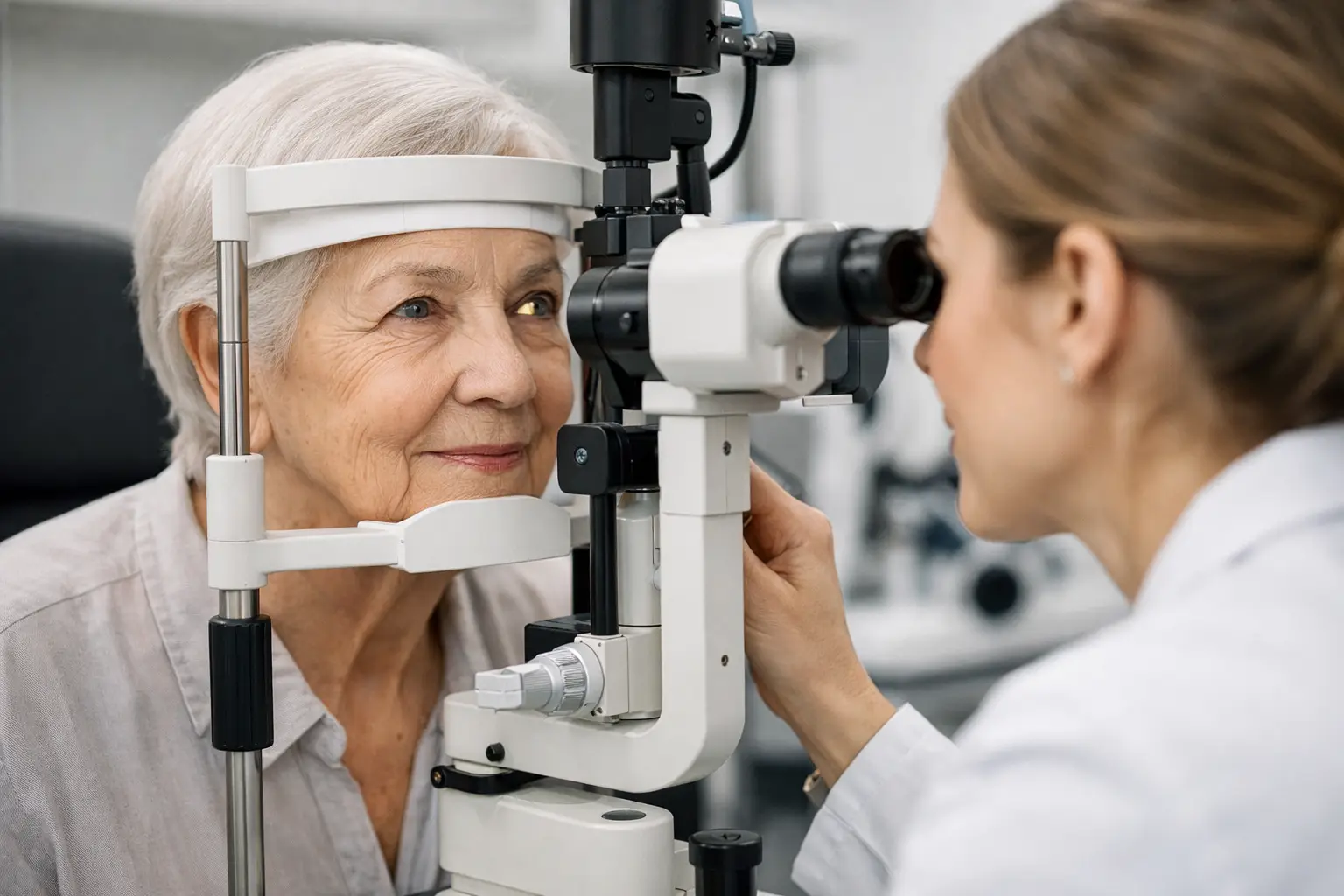
Next comes the health evaluation of the eye. Using specialized instruments, the optometrist examines the front of the eye, including the cornea, iris, and lens. This allows them to see whether a cataract is present, what type it may be, and how advanced it appears.
Dilation may also be recommended. Dilating drops widen the pupils so the optometrist can evaluate the retina and optic nerve more fully. This step is valuable because cataracts are not the only age-related eye issue to watch for. A complete exam can help identify other conditions early, even when symptoms overlap.
Can glasses fix cataract symptoms?
Sometimes, for a while. In the early stages, stronger lighting, anti-glare options, or an updated prescription may improve comfort and clarity. That is one reason regular eye exams are useful – they help track whether simple adjustments are still working.
But glasses do not remove a cataract. If the clouding in the natural lens keeps progressing, there comes a point when prescription changes stop giving satisfying results. Patients often describe this as seeing a little better on the chart, but not better enough in real life.
That distinction matters. If reading road signs is still difficult, glare remains bothersome, or your day-to-day vision feels unreliable, it may be time to discuss the next step.
When an optometrist may recommend cataract surgery evaluation
Optometrists diagnose and monitor cataracts, and they help determine when a referral for cataract surgery evaluation makes sense. Surgery is typically considered when cataracts begin interfering with daily activities rather than based on a single number or stage alone.
For one person, that may be trouble driving at night. For another, it may be difficulty reading, using a computer, recognizing faces clearly, or managing bright outdoor light. There is no prize for waiting until vision becomes severely limited.
At the same time, not every cataract needs immediate surgery. If symptoms are mild and your vision still meets your daily needs, careful monitoring may be the better approach. This is where personalized care matters. The best recommendation depends on your lifestyle, visual demands, overall eye health, and how much the cataract is affecting your comfort and confidence.
Why early testing matters
Many people hear the word cataract and assume it is a problem to deal with later. That can lead to unnecessary frustration. Early testing helps establish whether cataracts are present, how quickly they may be changing, and whether another eye condition also needs attention.
It can also prevent the cycle of repeatedly changing glasses without addressing the real cause. If your vision keeps shifting, a comprehensive eye exam can save time and reduce guesswork.
For adults managing diabetes or other health conditions, regular eye care is especially important. Eye changes do not always announce themselves clearly, and a thorough exam can reveal concerns before they become more disruptive.
Cataract testing is about more than diagnosis
A good exam should leave you with answers, not just a label. You should understand whether cataracts are present, how significant they are, and what your options look like now – not just someday.
That may mean updating your glasses and keeping an eye on future changes. It may mean adjusting lighting at home or taking glare more seriously when driving. Or it may mean planning for a surgical consultation because the cataract has reached the point where waiting is no longer helping.
The value of seeing an optometrist is that cataract testing happens in the context of complete vision care. Your symptoms, eye health, prescription, lifestyle, and long-term needs are looked at together. That gives you a clearer picture of what is happening and a more confident path forward.
If your vision has become duller, hazier, or harder to trust, do not brush it off as a normal part of getting older. A thorough exam can tell you whether cataracts are involved and what kind of care makes the most sense for you. Sometimes peace of mind starts with a simple appointment – and sometimes clearer vision does too.