What Is Included in an Eye Exam?
A lot of people walk into an appointment expecting one thing – a glasses prescription. Then they find out an eye exam covers much more. If you have ever wondered what is included in an eye exam, the short answer is this: your visit is designed to check how well you see, how well your eyes work together, and whether there are early signs of eye disease or other health concerns.
That matters whether you wear glasses every day, use contact lenses, have a child struggling in school, or simply have not had your eyes checked in a while. A comprehensive exam is not just about sharper vision. It is about protecting long-term eye health and catching problems before they start affecting daily life.
What is included in an eye exam for most patients?
Most comprehensive eye exams include a conversation about your health, a vision assessment, and a close evaluation of the eyes themselves. The exact tests can vary depending on your age, symptoms, medical history, and whether you wear glasses or contacts. A child may need more testing related to focusing and eye teaming, while an older adult may need closer screening for cataracts, glaucoma, or retinal changes.
That is why two people can have very different exam experiences and both still receive excellent care. A thorough exam is personalized, not rushed.
Your health and vision history
The exam usually starts before any machines or charts are involved. Your eye doctor or staff may ask about blurry vision, headaches, eye strain, dryness, floaters, flashes of light, or trouble seeing at night. You may also be asked about general health conditions such as diabetes, high blood pressure, allergies, or autoimmune conditions, since many medical issues can affect the eyes.
Family history is important too. If glaucoma, macular degeneration, or other eye diseases run in your family, that can change how closely your eyes should be monitored. Medications matter as well, because some prescriptions can affect vision, pupil size, tear production, or eye pressure.
This part may seem simple, but it helps shape the rest of the exam. Symptoms that seem minor to a patient can point to something that deserves a closer look.
Vision testing and prescription check
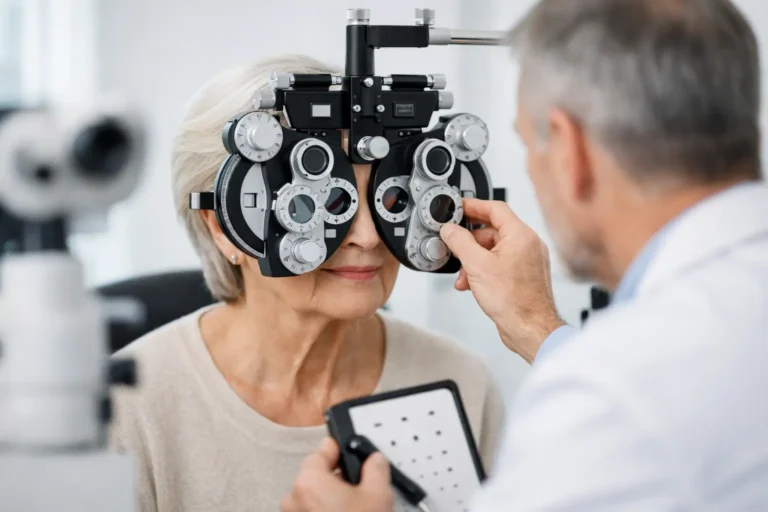
When most people think of an eye exam, this is the part they picture. Visual acuity testing checks how clearly you can see letters or symbols at a distance and sometimes up close. This helps measure whether your current prescription is still working or needs to be updated.
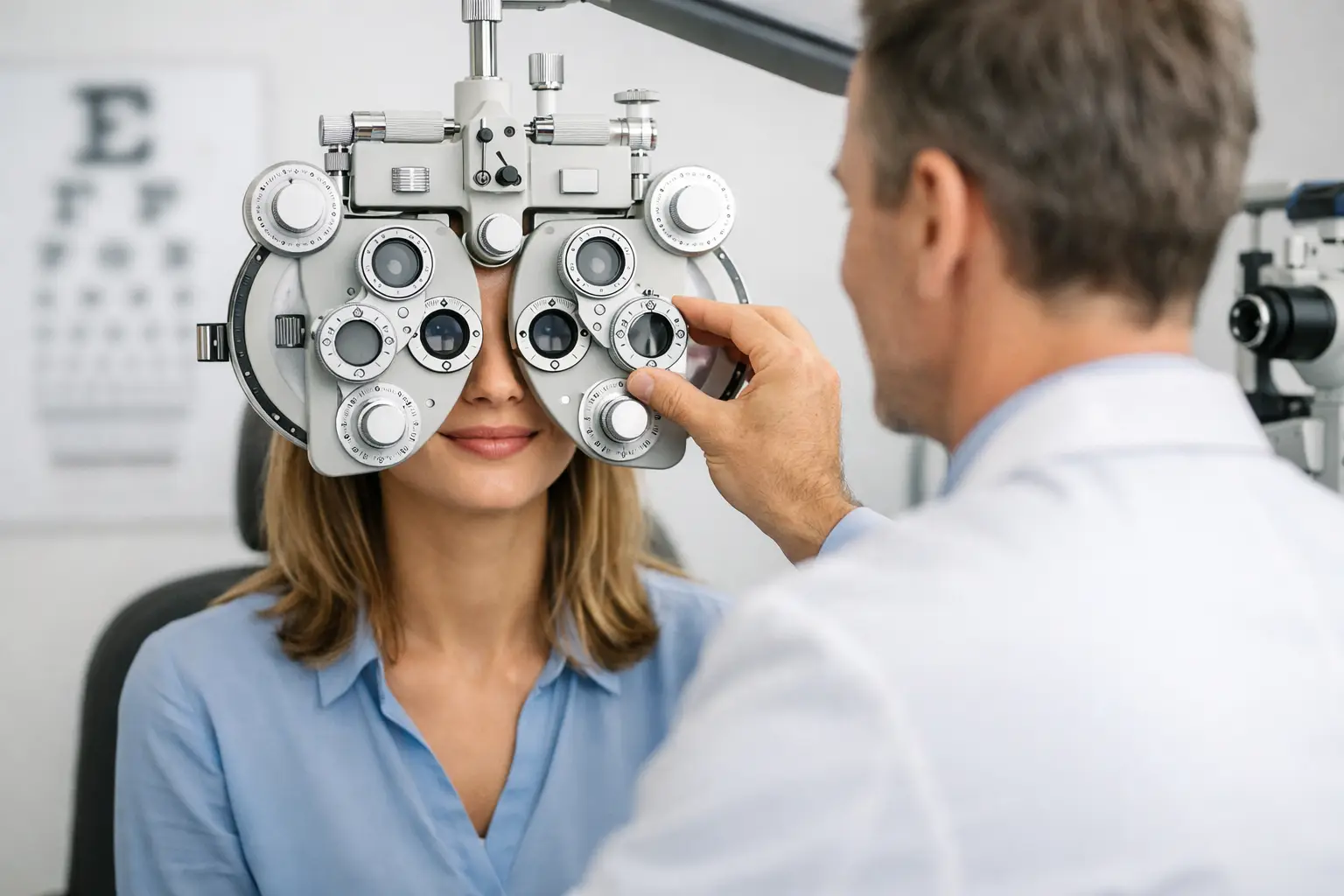
Refraction is the test used to determine your glasses prescription. You look through different lens choices and compare which view is clearer. It may sound straightforward, but it is one of the most useful ways to improve daily comfort. A small prescription change can make a big difference in driving, screen use, reading, and reducing fatigue.
If you already wear glasses, your current lenses may be checked too. That gives the doctor a clearer picture of what you are using now and whether it still matches your visual needs.
How your eyes focus and work together
Seeing clearly is only one part of comfortable vision. Your eyes also need to move properly, focus properly, and work together as a team. During an exam, the doctor may check eye alignment, tracking, focusing ability, and how your pupils respond to light.
This is especially important for children, students, and adults who spend long hours on computers or digital devices. A person can have 20/20 vision and still struggle with eye strain, double vision, poor focusing, or fatigue during reading and screen work. That is one reason a basic vision screening is not the same as a full eye exam.
If someone reports headaches, trouble concentrating, or words seeming to move on the page, this part of the visit becomes even more important.
Eye pressure testing and glaucoma screening
Many patients ask about the air puff test, and yes, that can be part of an exam, though some offices use other methods. Measuring eye pressure helps screen for glaucoma, a condition that can damage the optic nerve over time.
High eye pressure does not always mean glaucoma, and glaucoma can sometimes exist even when pressure is not very high. That is why pressure testing is only one piece of the picture. Your optic nerve, drainage angle, corneal thickness, and overall risk factors may all matter depending on the situation.
This is a good example of why comprehensive care matters. Glaucoma often develops without early symptoms, so patients usually do not feel anything is wrong until damage has already occurred.
Examining the front of the eye
A close look at the front structures of the eye is another key part of what is included in an eye exam. Using magnified light and specialized instruments, the doctor examines the eyelids, lashes, cornea, conjunctiva, iris, lens, and tear film.
This part of the exam can reveal dry eye, allergies, infections, inflammation, corneal scratches, cataracts, or contact lens-related irritation. For someone dealing with burning, redness, watering, or discomfort, this may explain why the eyes are not feeling normal even if vision seems mostly fine.
Sometimes the issue is minor and easy to treat. Sometimes it points to a more serious condition that needs prompt attention. Either way, identifying the cause is better than guessing with over-the-counter drops and hoping for the best.
Looking at the retina and optic nerve
The back of the eye gives important information about both eye health and general health. During a comprehensive exam, the retina, macula, blood vessels, and optic nerve are evaluated for signs of disease or damage.
This can help detect diabetic eye disease, macular degeneration, retinal tears, high blood pressure changes, and optic nerve problems. In some cases, dilation is recommended so the doctor can get a wider and clearer view inside the eye. Dilation may temporarily blur near vision and increase light sensitivity for a few hours, but it allows for a more detailed assessment.
Not every patient loves having dilating drops, which is understandable. Still, when recommended, dilation can be one of the most valuable parts of the visit because some serious conditions develop quietly.
What is included in an eye exam if you wear contacts?
If you wear contact lenses or want to start wearing them, there is usually an extra layer to the visit. A contact lens exam may include corneal measurements, tear film evaluation, lens fit assessment, and a discussion about wearing habits.
This matters because a contact lens prescription is not the same as a glasses prescription. Contact lenses sit directly on the eye, so the shape of the cornea, oxygen flow, tear quality, and lens movement all need to be considered. A lens that seems fine at first can still cause dryness, irritation, or blurred vision if the fit is not right.
Patients who wear contacts often benefit from honest conversation here. Sleeping in lenses, extending replacement schedules, or using the wrong solution can lead to problems that are avoidable with proper guidance.
Children, adults, and seniors may need different testing
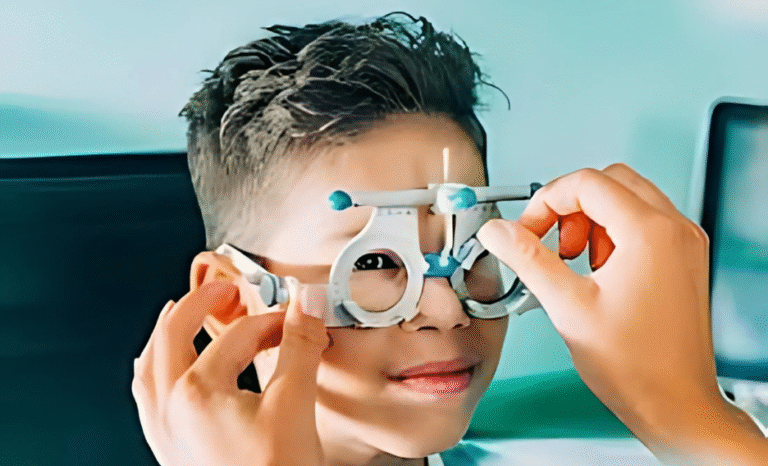
A child’s exam often includes careful attention to visual development, focusing skills, and whether the eyes are working together properly. This is useful even when a child does not complain, because kids do not always realize their vision is off.
For working adults, the exam may center more on digital eye strain, driving vision, contact lens comfort, and keeping prescriptions up to date. If someone uses screens all day, small changes in prescription or eye coordination can have a big effect on comfort.
For seniors, there is often more emphasis on monitoring cataracts, glaucoma, macular changes, and the impact of health conditions like diabetes or hypertension. The core exam is still comprehensive, but the focus shifts based on life stage and risk.
What happens after the testing
Once the exam is complete, your doctor should explain the findings in a way that makes sense. If your prescription changed, you will know what that means for glasses or contact lenses. If your eyes are healthy, that reassurance matters too. If something needs follow-up, you should leave understanding the next step.
That next step might be updating your eyewear, treating dryness or irritation, scheduling additional testing, or monitoring an early condition over time. Good eye care is not just about finding problems. It is about giving patients a clear plan and personalized attention, so they feel confident about their vision.
At a full-service practice like T&T Eyecare, that also means the convenience of moving from exam room to eyewear selection with guidance that matches both your prescription and your lifestyle.
Why a comprehensive exam is worth it
A quick screening can tell you that you may need glasses. A comprehensive eye exam can tell you much more. It evaluates how you see, how your eyes function, and whether there are early signs of disease that need attention.
That broader view is especially important because many eye conditions do not cause pain or obvious symptoms early on. By the time vision changes become noticeable, treatment may be more complicated than it needed to be.
If it has been a while since your last visit, or if you have noticed blurred vision, headaches, dryness, trouble reading, or changes in night driving, getting checked is a smart move. Clear vision feels good, but peace of mind is just as valuable.