Best Sunglasses With Prescription Lenses
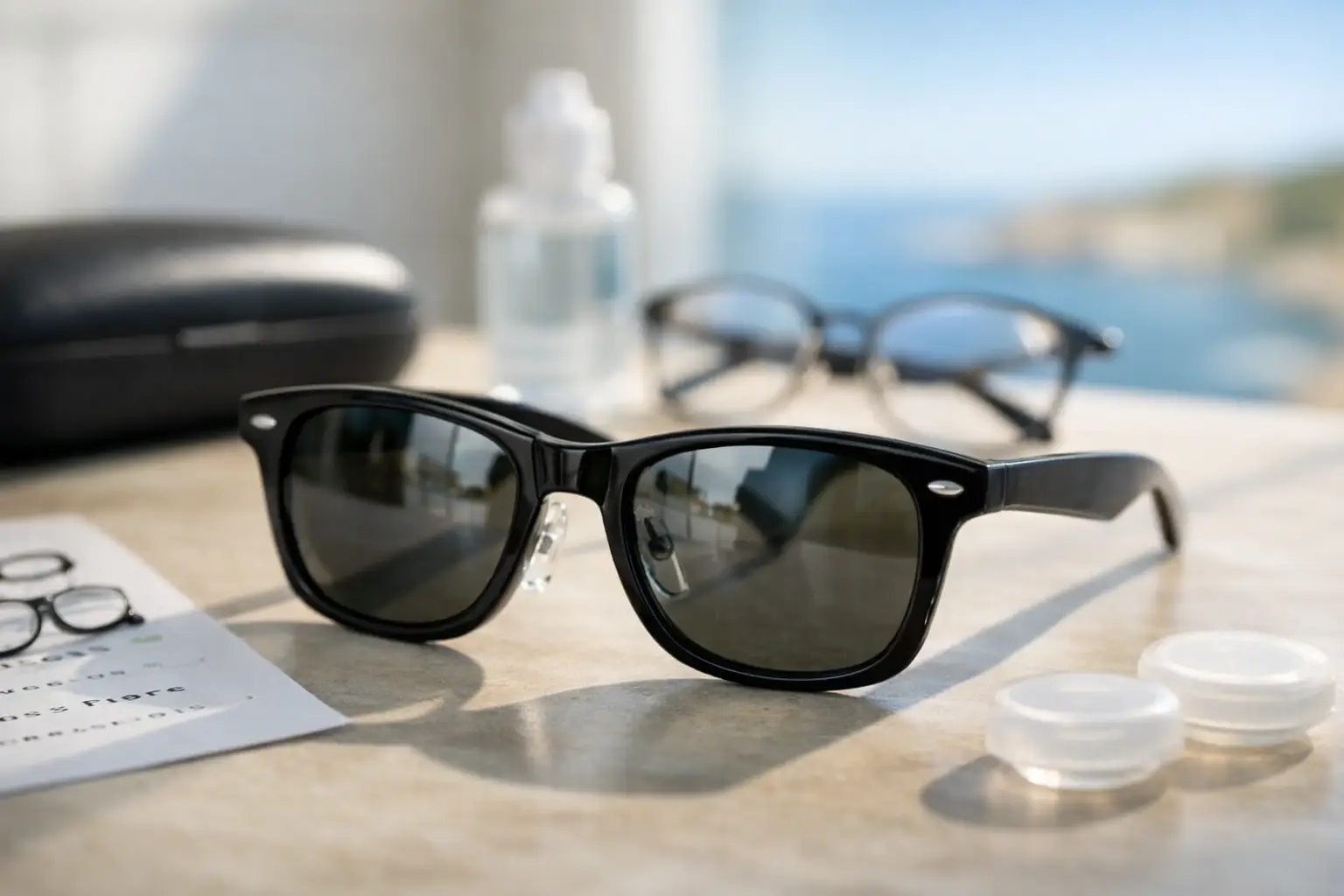
A pair of dark lenses that looks great on the shelf can feel completely wrong once your prescription is added. Frames sit differently, lens thickness changes the look, and some tints work better for driving than they do for beach days. That is why finding the best sunglasses with prescription lenses is less about chasing a trend and more about matching your everyday vision needs with the right frame, lens design, and protection.
For many people, prescription sunglasses are not a luxury. They are a practical part of seeing clearly and staying comfortable outdoors. If you spend time driving, working outside, walking in bright sun, or simply want to stop switching between glasses and non-prescription shades, the right pair can make daily life easier.
What makes the best sunglasses with prescription lenses?
The best pair does three jobs at once. It corrects your vision accurately, protects your eyes from ultraviolet light, and feels comfortable enough that you actually want to wear it. Style matters too, but style works best when the basics are handled first.
UV protection should be non-negotiable. Dark lenses without proper UV protection can leave your eyes more exposed because your pupils open wider behind the tint. A quality prescription sunglass lens should block 100% of UVA and UVB rays while still giving you the visual clarity your prescription requires.
The frame also plays a bigger role than most people expect. Large curved sunglasses may look appealing, but not every frame shape works well with every prescription. Stronger prescriptions often need careful frame selection so the finished lenses do not become unnecessarily thick, heavy, or visually distorted at the edges.
Start with your prescription, not the frame wall
It is easy to fall in love with a frame first, but your prescription should guide the process. Someone with mild nearsightedness has more freedom in frame shape and lens options than someone with a high prescription, astigmatism, or progressive lenses.
If your prescription is more complex, wraparound frames may have limits. Their curved shape can sometimes affect optical accuracy unless the lenses are specially designed for that frame. In some cases, a flatter sunglass style will provide better vision and a more natural feel.
This is also where a current eye exam matters. If your prescription has changed, even slightly, sunglasses made from an outdated prescription can leave you squinting, dealing with eye strain, or feeling that something is just off. Good outdoor vision starts with accurate measurements, not just the lens power written on an old pair of glasses.
Lens color matters more than people think
When patients ask about the best sunglasses with prescription lenses, they often focus on darkness. In reality, the color and function of the lens can matter just as much as the shade level.
Gray lenses are a strong all-around choice because they reduce brightness while keeping colors fairly natural. Brown and amber lenses can improve contrast and depth perception, which many people like for driving and outdoor activities. Green lenses offer a balanced option that can feel comfortable in bright light while preserving good contrast.
If you are sensitive to glare, polarization is often worth considering. Polarized lenses can cut reflected glare from roads, water, and other flat surfaces, which makes them especially useful for drivers and people who spend time near the coast. The trade-off is that some digital screens become harder to read through polarized lenses, so your daily habits should factor into the choice.
Picking the right frame for prescription sunglasses
A good sunglass frame should fit securely without pinching, sliding, or sitting unevenly. This is not just about comfort. Poor fit can affect how well you see through the optical center of the lenses.
Medium-size frames are often the safest choice for prescription sunglasses because they balance coverage, comfort, and lens thickness. Very oversized frames can create thicker edges for some prescriptions. Very small frames may limit your field of view or feel less protective in bright sun.
The bridge fit matters too. If the bridge is too wide, the sunglasses may slide down and change where you look through the lens. If it is too tight, you may stop wearing them because they become uncomfortable. A proper fitting helps the sunglasses perform the way they are supposed to.
Wrap styles can be excellent for sun protection, especially if you spend time outdoors or on the road, but they should be chosen carefully for prescription use. Sporty looks are possible, but the frame has to work with your lens design.
Should you choose single vision, bifocal, or progressive lenses?
Your lifestyle decides this more than fashion does. If you only need distance correction, single vision prescription sunglasses may be all you need for driving, errands, and outdoor activities. They are simple, effective, and usually easier to adapt to.
If you wear multifocal glasses indoors, you may also want that same convenience outside. Bifocal or progressive prescription sunglasses can help you see the road ahead and glance down at your phone, a receipt, or a menu without changing glasses. For many adults, especially those over 40, this makes a big difference in day-to-day comfort.
The trade-off is adaptation. Progressive lenses require precise measurements and a frame that gives enough vertical depth to fit the reading, intermediate, and distance zones well. If the frame is too shallow, the lens may feel cramped.
Lens materials and coatings that improve comfort
Lens material affects weight, impact resistance, and thickness. Polycarbonate and high-index materials are common choices for prescription sunglasses because they are lighter and more durable than basic plastic lenses.
Polycarbonate is often a practical option for active adults and children because it is impact resistant and lightweight. High-index lenses can be helpful for stronger prescriptions because they can reduce thickness. That said, the best material depends on your prescription and frame choice. One material is not automatically better for every person.
Coatings also matter. A backside anti-reflective coating can reduce glare bouncing into your eyes from the rear surface of the lenses, which is especially helpful in bright environments. Scratch resistance is useful too, especially if your sunglasses spend a lot of time in the car, a handbag, or a beach bag.
Common mistakes when buying prescription sunglasses
One common mistake is choosing based only on appearance. A stylish frame that does not support your prescription well can end up being expensive and disappointing.
Another is assuming darker means better. Very dark lenses are not always ideal, especially if you move between bright outdoor light and shaded areas often. The right tint should support how and where you use the sunglasses.
People also underestimate the value of professional fitting. Online options can seem convenient, but prescription sunglasses depend on more than lens power alone. Pupillary distance, fitting height, frame curve, and how the frame sits on your face all affect the final result.
How to know which pair is best for you
The best pair usually comes down to one question: when will you wear them most? For driving, polarization and contrast-enhancing tints are often helpful. For everyday use, a comfortable frame with gray or brown lenses may cover almost everything. For outdoor work or long periods in harsh sun, you may want more coverage and durable materials.
If you already wear glasses comfortably, your sunglasses should feel just as dependable. You should not have to settle for poorer vision outdoors than you have indoors. A personalized fitting can make the difference between sunglasses that simply look nice and sunglasses that become part of your daily routine.
That is why many patients do best when they choose prescription sunglasses as part of a complete eye care visit. Your exam confirms whether your prescription is current, your eye doctor can ask about glare sensitivity or lifestyle needs, and the optical team can guide you toward frames and lens options that suit your vision and your style. At T&T Eyecare, that combination of medical guidance and eyewear support helps take the guesswork out of the process.
The right prescription sunglasses should help you feel comfortable, protected, and confident every time you step outside. If a pair does all three, you will not need much convincing to keep them close by.