Dry Eye Treatment Options That Really Help
Your eyes should not feel scratchy by lunchtime, watery in air conditioning, or tired every time you look at a screen. Yet that is exactly how dry eye often starts – not as one dramatic symptom, but as a daily annoyance that keeps coming back. Understanding dry eye treatment options can help you move from temporary relief to a plan that actually fits your eyes, your routine, and the cause of the problem.
Dry eye is common, but it is not always simple. Some people do not make enough tears. Others make tears that evaporate too quickly because the oil layer is weak. Many patients have a mix of both. That is why one person feels better with lubricating drops, while another needs eyelid treatment, prescription therapy, or changes to contact lens wear.
Why dry eye happens in the first place
Healthy tears do more than add moisture. They help keep the front surface of the eye smooth, clear, and comfortable. When that tear film becomes unstable, the eyes can burn, sting, feel gritty, look red, or produce excess tears as a response to irritation.
A number of everyday factors can contribute. Screen time reduces blinking. Air conditioning and fans speed up evaporation. Contact lenses can make symptoms more noticeable. Age, hormonal changes, certain medications, allergies, and eyelid inflammation can also play a role. In some cases, dry eye is linked to medical conditions that affect tear production or the quality of the glands along the eyelids.
Because the causes vary, treatment works best when it is personalized. The goal is not only to add moisture, but to improve the tear film and reduce whatever is triggering the dryness.
Dry eye treatment options at home
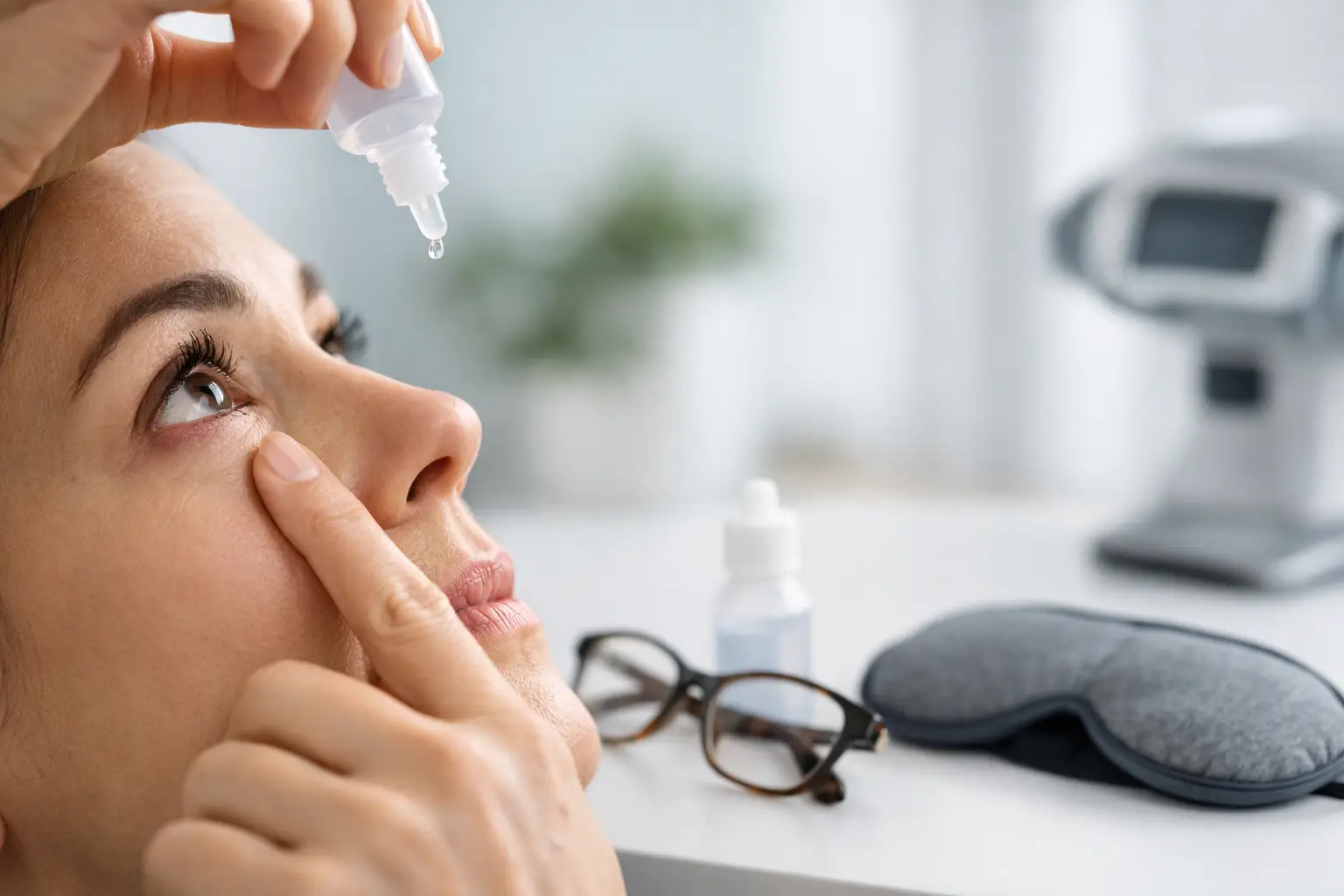
For mild cases, home care may be the right starting point. Artificial tears are usually the first option people try, and they can be very effective when chosen well and used consistently. Thinner drops may work for occasional dryness, while thicker lubricating drops or gels may help more if symptoms are frequent or worse at night.
That said, not all eye drops are meant for dry eye. Redness-relief drops may make eyes look whiter for a short time, but they do not treat the underlying dryness. In some people, they can even make the cycle of irritation worse. If you are reaching for drops several times a day and still feel uncomfortable, it is a sign you may need a more targeted approach.
Warm compresses can also help, especially when the oil glands in the eyelids are not working well. Gentle heat softens thickened oils so they can flow more easily into the tear film. Lid hygiene matters too. If debris, inflammation, or blepharitis is present along the lash line, cleaning the lids regularly may improve both comfort and tear quality.
Simple environmental changes can make a real difference. Taking screen breaks, blinking more often, avoiding direct airflow to the face, and using a humidifier in dry indoor spaces can reduce evaporation. If contact lenses are part of the problem, your doctor may recommend shorter wear time, a different lens material, or a different care routine.
When over-the-counter relief is not enough
If dry eye keeps returning, there is usually a reason. Maybe the drops are not the right type. Maybe the eyelid glands are blocked. Maybe inflammation is keeping the eye surface irritated even when you add moisture. This is where a full eye exam becomes valuable.
An exam can help determine whether your dry eye is mostly from low tear production, poor oil gland function, inflammation, contact lens irritation, or another eye health issue. Symptoms can overlap with allergies, infections, and eyelid conditions, so guessing is not always helpful.
This is also why treatment can take some adjustment. There is no single best solution for everyone. A college student spending long hours on screens may need a different plan than a senior taking medications that reduce tear production. A contact lens wearer with mild dryness may do well with lens changes and lubricating drops, while someone with chronic burning and fluctuating vision may need prescription support.
Prescription dry eye treatment options
When inflammation is part of the problem, prescription treatment may be recommended. Certain medicated eye drops are designed to reduce inflammation on the eye surface and help the eyes produce better quality tears over time. These are not quick-fix drops. They often take consistent use and follow-up to judge how well they are working.
Short-term prescription steroid drops may also be used in select cases to calm significant inflammation. They can be very effective when used appropriately, but they are not for casual long-term use without supervision. Your eye doctor will weigh the benefits against the need for monitoring.
If dryness is linked to the eyelids or meibomian gland dysfunction, treatment may focus there as well. Prescription lid therapies, gland-focused care, or a structured routine for cleaning and warming the eyelids can improve comfort more than artificial tears alone.
This is where personalized attention matters. The right treatment is not always the strongest one. It is the one that matches the source of your symptoms and fits into your daily life well enough that you will actually use it.
In-office dry eye treatment options
Some cases need more than drops and home care. In-office treatment may be recommended when symptoms are ongoing, moderate to severe, or clearly related to gland dysfunction.
One common approach is punctal plugs, which are tiny inserts placed in the tear drainage ducts to help keep tears on the eye longer. For the right patient, this can improve moisture retention and reduce irritation. It is not the best fit for everyone, especially if untreated inflammation is still active, but it can be helpful as part of a broader plan.
Another path focuses on the eyelid oil glands. If these glands are blocked or producing poor-quality oil, the tear film evaporates too quickly. In-office gland expression or other targeted eyelid treatments can help restore function and improve comfort. Patients often benefit most when these treatments are paired with home maintenance rather than used as a one-time fix.
If your symptoms are affecting reading, driving, computer work, or contact lens comfort, asking about in-office care can be worthwhile. It may shorten the trial-and-error period and address the underlying problem more directly.
Lifestyle changes that support long-term relief
Dry eye often responds best to a combination of treatment and routine changes. This does not mean your whole life has to revolve around eye drops. It means small daily habits can support the medical care you receive.
Staying hydrated helps, though hydration alone will not solve every case. Paying attention to screen habits is a bigger factor for many people. When we concentrate, we blink less and incompletely, which leaves the eyes exposed longer. Deliberate blinking and regular breaks can reduce strain and dryness at the same time.
If makeup, skin care products, or lash treatments are getting too close to the eyelid margin, they may also contribute to irritation. The same goes for poorly fitting contact lenses or old lens habits that no longer suit your eyes. A good treatment plan looks at these practical details, because they often explain why symptoms keep coming back.
When to schedule an eye exam for dry eye
If your eyes feel dry once in a while, home care may be enough. But if symptoms are frequent, worsening, or interfering with work and comfort, it is time to be evaluated. The same is true if you have redness, light sensitivity, fluctuating vision, excessive tearing, or trouble wearing contact lenses.
Dry eye can sometimes seem minor from the outside while causing real disruption day to day. It can affect focus, sleep, reading, and screen tolerance. More importantly, persistent symptoms deserve proper attention so you are not treating the wrong problem or relying on short-term relief that never quite solves it.
At a full-service practice like T&T Eyecare, dry eye care can be approached as part of your overall vision health, not as an isolated complaint. That means looking at the tear film, eyelids, eye surface, prescription needs, and contact lens habits together, then building a treatment plan around what will help you most.
The best dry eye treatment options are the ones that match the reason your eyes are dry in the first place. If your eyes have been asking for help every day, a personalized exam is a smart next step – and often the fastest way to real comfort.