Dry Eye Treatment Guide for Lasting Relief
Your eyes should not feel gritty by midmorning, burn through the workday, or water so much that they blur your vision. Those complaints are common, but they are not something you have to simply put up with. A good dry eye treatment guide starts with one basic truth – dry eye is often more complex than it sounds, and real relief usually depends on finding the cause.
Some people have dry eye once in a while after a long day in air conditioning or hours of screen time. Others deal with daily discomfort that affects reading, driving, contact lens wear, or even just keeping their eyes open comfortably. The right treatment can make a major difference, but it is rarely one-size-fits-all.
What dry eye actually is
Dry eye happens when your eyes do not make enough tears, when tears evaporate too quickly, or when the tear film is not balanced well enough to protect the eye’s surface. Tears are not just water. They include oily, watery, and mucus components that work together to keep your eyes smooth, comfortable, and clear.
When that balance is off, the eye surface becomes irritated. That irritation can lead to redness, stinging, fluctuating vision, light sensitivity, and the strange experience of watery eyes at the same time. Excess tearing sounds contradictory, but it often happens because irritated eyes reflexively produce poor-quality tears that do not solve the underlying dryness.
Common causes behind dry eye
A useful dry eye treatment guide has to look beyond symptoms. Many cases are tied to everyday habits and environments. Long hours on phones and computers reduce blink rate, which lets tears evaporate faster. Ceiling fans, air conditioning, and dry indoor spaces can make the problem worse.
Age also plays a role. Tear production often decreases over time, which is one reason dry eye becomes more common in older adults. Hormonal changes can contribute as well. Contact lenses may worsen dryness for some patients, especially late in the day.
There are also medical causes. Eyelid inflammation, meibomian gland dysfunction, allergies, certain medications, autoimmune conditions, and previous eye surgery can all affect tear quality or quantity. This is why two people with the same “dry eye” complaint may need very different care plans.
Signs it is more than occasional irritation
If your symptoms happen once after a poor night’s sleep, home care may be enough. But if discomfort keeps returning, it is worth taking seriously. Dry eye can affect day-to-day quality of life more than people expect.
Watch for burning, stinging, scratchiness, blurry vision that comes and goes, tired eyes, sensitivity to light, redness, stringy mucus, or discomfort with contact lenses. Some patients notice symptoms get worse while reading, using a computer, driving, or spending time in air-conditioned spaces. If those patterns sound familiar, an eye exam can help pinpoint what is driving the problem.
Dry eye treatment guide: what usually helps first
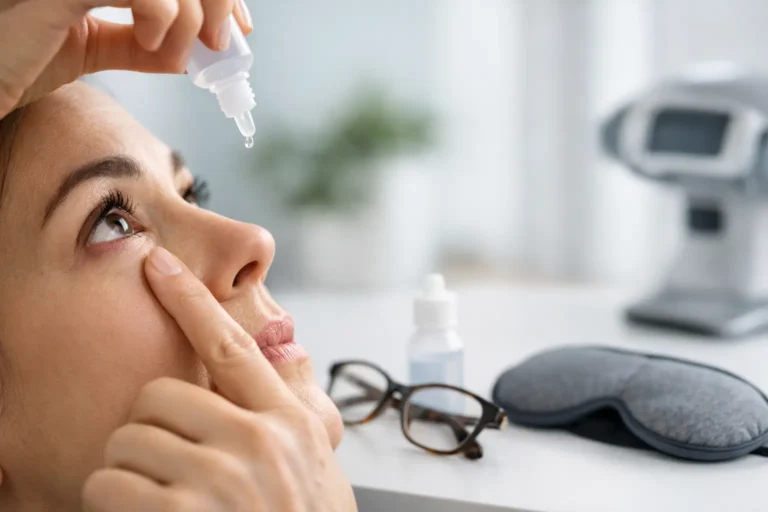
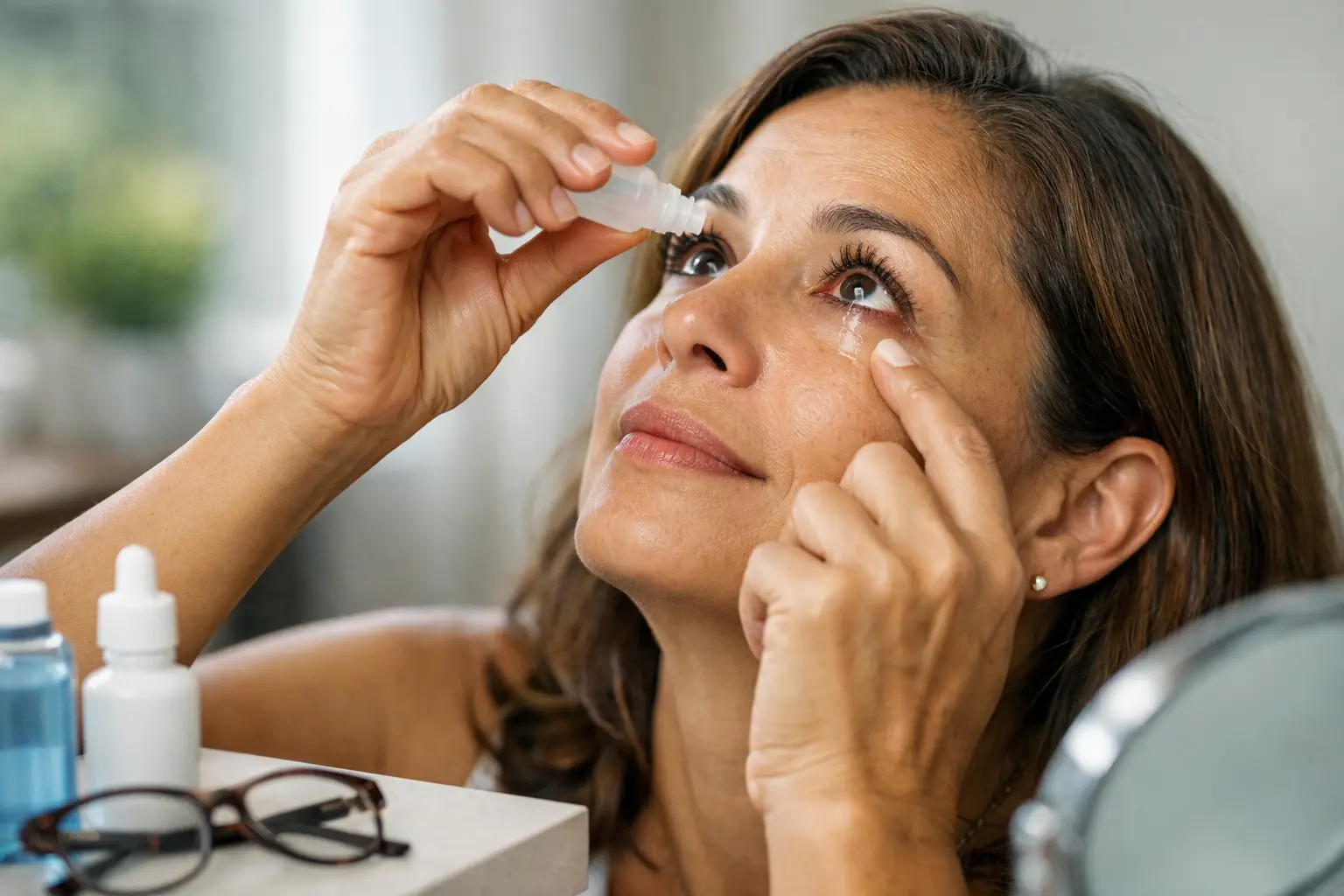
For mild cases, treatment often begins with practical changes and supportive care. Artificial tears are usually the first step, but product choice matters. Some drops are designed for frequent lubrication, while others focus more on stabilizing the tear film. Preservative-free options are often better for people who use drops several times a day or have sensitive eyes.
Warm compresses can also help, especially when the oil glands in the eyelids are not working well. The goal is not just comfort in the moment. Gentle heat can soften blocked oils and improve the tear film over time when done consistently.
Eyelid hygiene may be recommended if there is buildup along the lash line or signs of blepharitis. That can mean specific lid cleansers or a simple cleaning routine advised by your eye doctor. If screens are part of the problem, making a conscious effort to blink more fully and take regular visual breaks can reduce strain and evaporation.
Hydration, sleep, and environment matter too. Drinking enough water, limiting direct airflow to the face, and using a humidifier in very dry rooms can help support other treatments. These steps are simple, but they work best when they match the actual reason your eyes are dry.
When over-the-counter drops are not enough
Many people try drops for weeks or months and still feel uncomfortable. That does not always mean dry eye is severe, but it often means the treatment has not been specific enough.
For example, if inflammation is part of the problem, lubrication alone may not bring lasting relief. If the eyelid oil glands are blocked, tears may keep evaporating quickly no matter how often drops are used. If contact lenses are contributing, the answer may involve adjusting wearing time, lens material, or care products rather than simply adding more drops.
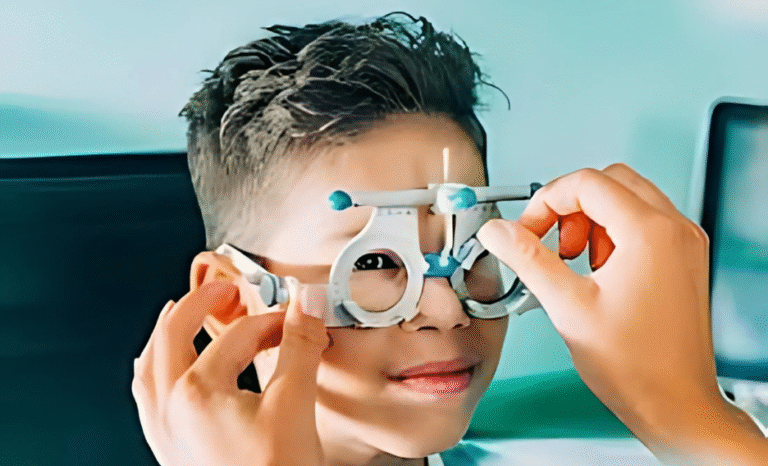
This is where a professional evaluation becomes valuable. A comprehensive eye exam can assess tear quality, tear quantity, the health of the eyelids, and the condition of the eye surface. That helps move treatment from guesswork to a personalized plan.
Prescription and in-office treatment options
When symptoms are persistent or moderate to severe, your eye doctor may recommend prescription treatment. Some medications are designed to reduce inflammation and help the eyes produce healthier tears. These are not quick fixes, and they may take time to show full benefit, but for the right patient they can be an important part of long-term control.
In some cases, doctors may recommend punctal plugs, which help keep tears on the eye longer by reducing drainage. This can be helpful when tear production is low, though it is not ideal for every patient. If inflammation or poor oil gland function is the main issue, other strategies may be more effective.
In-office care may also be recommended for eyelid-related dry eye. Treatments that target meibomian gland dysfunction can help improve the oily layer of the tear film. That matters because without enough oil, tears evaporate too quickly. Patients often think dry eye only means not enough tears, but poor tear quality is just as common.
There is some trial and adjustment involved in dry eye care. What works well for one person may only partly help another. The goal is not only to reduce symptoms today, but to protect the eye surface and improve comfort over time.
Dry eye and contact lenses
Contact lens wearers often assume discomfort is just part of wearing lenses, especially in warm climates, air-conditioned offices, or after long days. It is common, but it should not be ignored.
Sometimes the issue is the lens material, the fit, or wearing lenses longer than the eyes can comfortably tolerate. Sometimes the underlying problem is untreated dry eye that becomes more noticeable with lenses in place. A contact lens exam can help sort that out and identify whether a different lens type or wearing schedule would make things easier.
If you are using rewetting drops constantly just to get through the day, that is a sign you may need a better plan.
When to schedule an eye exam
Dry eye is usually manageable, but there are times when you should not wait it out. If you have eye pain, sudden vision changes, significant redness, discharge, or symptoms in only one eye, it is best to get checked promptly. Those signs can point to something other than routine dry eye.
You should also schedule an exam if dryness keeps returning, interrupts work or driving, affects contact lens use, or does not improve with basic home care. Families often prioritize vision exams for glasses and prescriptions, but comfort is part of healthy vision too. When your eyes feel irritated all day, it affects focus, productivity, and quality of life.
At a full-service practice such as T&T Eyecare, dry eye care can be part of a more complete eye health conversation. That means looking not only at symptom relief, but also at eyelid health, contact lens comfort, prescription needs, and any signs of underlying disease.
What lasting relief usually looks like
The most effective treatment plan is usually a combination of steps rather than a single product. That may include daily habits, the right type of lubricating drops, eyelid care, changes to screen use, and medical treatment when needed. Some patients improve quickly. Others need a few adjustments before symptoms settle down.
That does not mean treatment is failing. It means dry eye is a condition that benefits from personalized attention and follow-up. The good news is that many people get meaningful relief once the cause is identified and the plan fits their eyes, their routine, and their overall health.
If your eyes are constantly reminding you they are there, that is your cue to stop guessing. Comfortable vision is not a luxury – it is part of complete eye care, and it is worth treating with care.